
A mechanic performs engine repair, restoring a car’s engine to proper working order by diagnosing faults, replacing worn or damaged parts, and verifying performance and efficiency. It sits between routine maintenance and a full rebuild or a complete engine replacement.
How An Engine Works in One Minute
An internal combustion engine draws air and fuel into cylinders, compresses the mixture, and ignites it with a spark to enhance engine performance, then expels exhaust gases. The burn drives pistons up and down, the crankshaft converts this into rotational motion, and power reaches the wheels through the transmission. Faults at any stage can cause misfires, rough idle, overheating or a check engine light. Clicking, grinding, whining, or other startling warning sounds typically indicate engine issues that need to be addressed promptly.
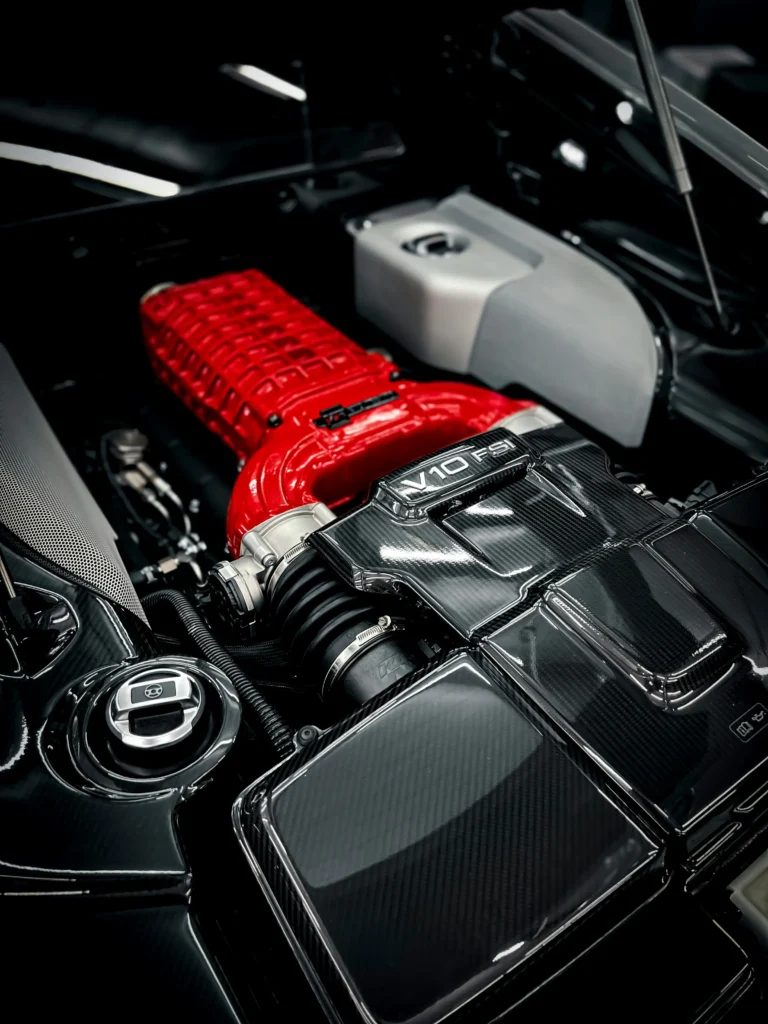
Common Signs You Need Engine Repair
| Symptom | Likely Causes | Risk | Action |
| Check Engine Light | Error codes for sensors, misfire, fuel trim | Medium | Scan for codes and book a diagnosis |
| Unusual Noises | Knocking, tapping, worn bearings or timing issues | High | Avoid hard driving and have it inspected |
| Overheating | Low or dirty coolant, thermostat, radiator or water pump | High | Pull over, allow to cool, arrange a tow |
| Oil Leaks | Damaged gaskets, seals or oil pan | Medium | Fix leaks promptly to prevent further damage |
| Poor Fuel Efficiency | Fuel injectors, oxygen sensor, MAF, spark plugs | Medium | Diagnose and correct to protect the catalytic converter |
| Coloured Smoke | Blue oil burn, white coolant, black rich mixture | High | Stop driving if blue or white smoke appears |
| Stalling Or Hard Starts | Ignition or electrical faults, low fuel pressure | High | Seek immediate diagnosis |
Diagnostics Before Parts
- OBD II scan and freeze frame review to identify fault patterns
- Visual checks for coolant, fuel and oil leaks
- Compression and leak down tests for piston rings, valves and head gasket condition
- Fuel pressure and injector balance tests
- Ignition scope testing on coils and spark plugs
- Cooling system pressure test and thermostat operation check
- Fuel system cleaning helps maintain fuel efficiency and performance
Testing first prevents guessing regarding engine problems, finds root causes and keeps repairs cost effective. After major work, the reassembled engine is tested for performance, oil pressure and leaks, and may be run on a test bench before refit where appropriate.

What Engine Repair Involves
Engine repair fixes specific parts or systems within the engine to restore the engine’s operation. Depending on the diagnosis, worn or damaged engine components are replaced, such as pistons, piston rings, bearings, gaskets, seals, timing belts or chains, oil pumps, sensors and hoses. Timing belt failure can cause major engine damage, often requiring partial or full engine repair if the belt snaps. All relevant components are cleaned to remove dirt, oil sludge and carbon deposits before inspection so wear can be assessed accurately.
Poor lubrication is a common root cause. Low oil level or degraded oil can create excessive friction, accelerate wear, build sludge and in severe cases seize the engine. Overheating is another major trigger, often from low coolant, a stuck thermostat, a blocked radiator or a failed water pump. Issues with the engine’s electrical system, such as a malfunctioning ignition or starter, can prevent the engine from starting or cause intermittent problems. Addressing minor issues early helps prevent engine damage and more costly repairs.
Types Of Engine Repair
Minor Repairs
Target isolated faults without opening the engine. Typical work includes replacing spark plugs or coils, fixing oil leaks with new gaskets or seals, changing a faulty thermostat, replacing sensors that trigger the engine light, and cleaning the fuel system to improve fuel efficiency. Repairs are best for minor and isolated problems within the engine.
Major Repairs
Involve internal components or timing. Examples include head gasket replacement, cylinder head work on valve seats and guides, timing belt or chain service, oil pump and seal replacement, piston rings on high mileage engines, and engine block related repairs where wear or damage is confirmed.
Engine Rebuild Versus Replacement
A rebuild means taking the engine apart, cleaning, measuring and replacing worn parts before careful reassembly with correct lubrication and torque settings. The engine is carefully reassembled with proper lubrication, torque specifications, and alignment of components. Rebuilding is thorough and can be a cost effective way to extend engine longevity, especially on older cars with widespread wear. Replacement installs a reconditioned or new long motor and is often the most expensive option, but it ensures a fully rebuilt or new unit compatible with the vehicle. Repairs are generally faster and less complex than a full rebuild. Choosing between repair, rebuild or replacement depends on damage extent, overall engine condition, budget and how long you plan to keep the car.
Typical Costs and Timeframes
Pricing depends on diagnosis, parts quality and labour hours. Minor adjustments such as replacing spark plugs, coils or a thermostat are usually same day jobs. Larger tasks like a timing belt service or a head gasket repair take longer due to disassembly, machining and reassembly. A full rebuild is time consuming and quoted case by case after measurement. In most situations, targeted repairs are less expensive than a full rebuild or a replacement engine but estimates only firm up once testing confirms the fault and any related component wear.
How To Prevent Repeat Failures
Regular maintenance keeps the car running efficiently and protects engine health. Follow oil changes on time with the correct specification, replace the oil filter and air filter as scheduled, service the cooling system, and attend to warning signs promptly. Maintenance tips include regularly replacing air filters to ensure a clean air intake. Gentle warm up and avoiding sustained overheating reduce risk. Fix small oil leaks early to prevent more serious damage.
- Service Intervals That Matter: Oil, Filters, Coolant And Scheduled Timing Belts
- Driving Habits: Avoid Excessive Heat And Load Where Possible
- Warning Light Rules: Stop For Overheat Or Oil Pressure, Book Diagnosis For A Check Engine Light
Engine Repair at Eurotech Autohaus
Our process starts with a thorough diagnosis, not parts swapping. We scan the engine control unit, verify faults with mechanical tests, and only then replace components. Work may include cleaning and inspection, precise reassembly to spec and verification of oil pressure and leak integrity before handover. Where appropriate we use genuine or OEM equivalent parts, and we document findings so vehicle owners can make informed decisions before any major work proceeds.

Frequently Asked Questions
Is Engine Repair the Same as an Engine Rebuild?
No. Engine repair fixes specific faults such as a leaking gasket, faulty spark plugs or a failed sensor. An engine rebuild means the engine is removed, disassembled, cleaned, measured and reassembled with new internal components to restore overall condition.
Can I Drive with a Misfire or a Check Engine Light?
A flashing light or a noticeable misfire can damage the catalytic converter and lead to further damage. Reduce speed, avoid load and book a diagnosis. If overheating or low oil pressure is present, it could indicate a serious problem, so stop driving. If your vehicle stalls on the road, it means that your engine has stopped working and requires immediate attention.
What Does White, Blue or Black Exhaust Smoke Mean?
Blue smoke indicates oil burning, white smoke can indicate coolant entering cylinders, and black smoke points to a rich mixture. All require a thorough diagnosis to prevent more serious damage.
When Is Engine Replacement Better Than Repair?
Replacement is considered when wear is widespread or severe damage makes a rebuild uneconomic. If the engine has issues such as worn piston rings, a replacement engine is often the most expensive option, but it ensures a fully rebuilt or new compatible unit.
How Long Does Engine Diagnosis Usually Take?
Most cars can be scanned and tested within the same day. Complex faults that need cold and hot tests, injector balance checks or cylinder leakage testing can take longer to confirm.
Conclusion
Engine repair covers everything from a simple sensor replacement to a full rebuild, depending on what testing reveals. Timely repairs and regular maintenance extend engine life, improve fuel efficiency and prevent major problems. If you notice warning signs such as overheating, oil leaks, unusual noises or a check engine light, arrange a professional diagnosis. Book a diagnostic inspection with Eurotech Autohaus to protect your engine and avoid more costly repairs.
SERVICE QUOTE
24 Radius Loop, Bayswater WA 6053
Monday – Friday: 8am – 5pm
Saturday: 9am – 1pm
(Appointments Only)
Our Services
Brake Servicing
- Brake Inspection & Diagnosis
- Disc Brake Service
- Drum Brake Service
- Master Cylinder
- ABS Diagnosis
- Brake Fluid Flush
Car Electrical Services
- All lighting and modifications
- Control module diagnosis
- Alternators, Batteries
- Starters
- Air Bag System Diagnosis and repair
- Accessories and upgrades
- Windshield Wipers & Washers
Collision Advice
- Insurance Claims
- Vehicle Restoration
- Body Kits
- Glass Replacement
- Custom Graphics
- Interior & Exterior Trim
- All Makes and Models
Comfort System
- Air Conditioning Service
- System Diagnosis
- Heater Core
- A/C Compressors
- Blower Motors
- Climate Control System
Cooling System
- Leak Diagnosis
- Overheating Diagnosis
- Water Pumps
- Radiators
- Cooling Fans
- Coolant Hoses
- Thermostats
Engine Performance
- High Performance Upgrades
- Drivability Diagnosis
- Fuel Injection Service
- Computer System Diagnosis
- Maintenance Tune-Up
- Emission Diagnosis & Repair
- “Check Engine” Light Diagnosis
Engine Servicing
- Oil Leak Diagnosis
- Timing Belts
- Performance manifolds and accessories
- Head Gaskets
- Engine Replacement
- Engine Service
- Exhaust System Replacement & Repair
- Performance Upgrades
Maintenance Services
- Factory protected log book servicing
- Full 100 safety point inspections
- Transmission Service
- Cooling System Flush
- Tyre Rotation & Balance
Pop and Crackle Tunes (Burble Tunes)
- Stage 1 Tuning
- Stage 2 Tuning
- Stage 3 Tuning
- Fuel Efficiency Tuning
- Engine Remapping
Steering & Suspension Servicing
- Two & Four Wheel Alignments
- Struts & Shocks upgrades or replace
- Rack & Pinion diagnosis and repair
- High Performance Suspension
- Upgrades & Adjustments
- Tyre Replacement
- Transmission diagnosis & Repair
- Differential Replacement
- Complete Drive Train Repair